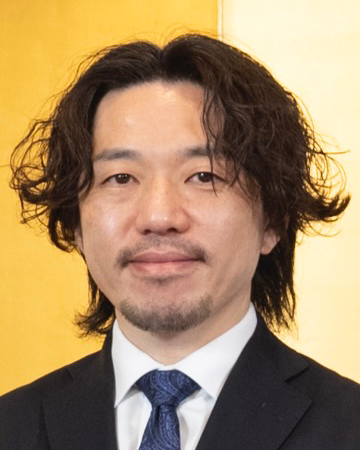
Koji Ishibashi
The year 2025 marks a significant milestone for the Advanced Wireless & Communication Research Center (AWCC), as we celebrate the twentieth anniversary of its establishment in 2005. It is a great honor for me to assume the role of Director in this commemorative year and embark on a new journey together with the members of AWCC.
Over the past two decades, AWCC has built a distinguished record through its participation in numerous national research programs and collaborative initiatives. In academic year 2025, the center continued this tradition through major projects, including JST CRONOS and other large-scale government-funded programs, producing outcomes of both academic significance and engineering impact. These achievements are possible only because of the outstanding efforts of our researchers. The accomplishments realized during the year clearly demonstrate the strength, dedication, and creativity of the AWCC community.
At the same time, academic year 2025 saw the departure of several highly accomplished researchers. While this inevitably affected the center’s overall performance, I view it not only as a loss but also as a reflection of the role AWCC plays in cultivating talent. As researchers who have gained valuable experience at AWCC move on to new stages of their careers, they strengthen research networks throughout Japan and contribute to enhancing the nation’s scientific and technological presence on the global stage. I sincerely hope that their future successes will further deepen these connections and create new opportunities for collaboration.
Meanwhile, the rapid progress of artificial intelligence (AI), highlighted by the emergence of generative AI as a transformative technology since late 2022, continues to reshape the landscape of science and engineering. This wave has also reached the field of wireless communications. Looking toward the 6G era, discussions have expanded beyond technologies such as integrated sensing and communications (ISAC) and non-terrestrial networks (NTN) to include the integration of AI into radio access technologies and, ultimately, AI-native networks in which intelligence is seamlessly embedded throughout the entire network architecture.
As this trend accelerates, understanding AI and learning how to effectively leverage it will become increasingly important. At the same time, leading universities around the world have begun to discuss the potential impact of AI on learning and intellectual development. We are entering an era in which institutions must carefully consider not only how AI can be utilized in research, but also how future researchers and engineers should be educated in the presence of increasingly powerful AI systems.
Against this backdrop, AWCC must continue to evolve. By embracing the opportunities presented by the AI-native era, we aim to cultivate the next generation of researchers and engineers while fostering a research environment that remains innovative, internationally visible, and intellectually vibrant. As we celebrate the twentieth anniversary of AWCC, we must also look beyond the present and prepare for the next decade and the decade that follows. Building upon the strong foundation established over the past twenty years, I look forward to working together with all members of AWCC to create the next chapter in the center’s history.
Koji Ishibashi, Director of AWCC